Month's Mind Explained: What It Is, When It Happens, and What Families Do
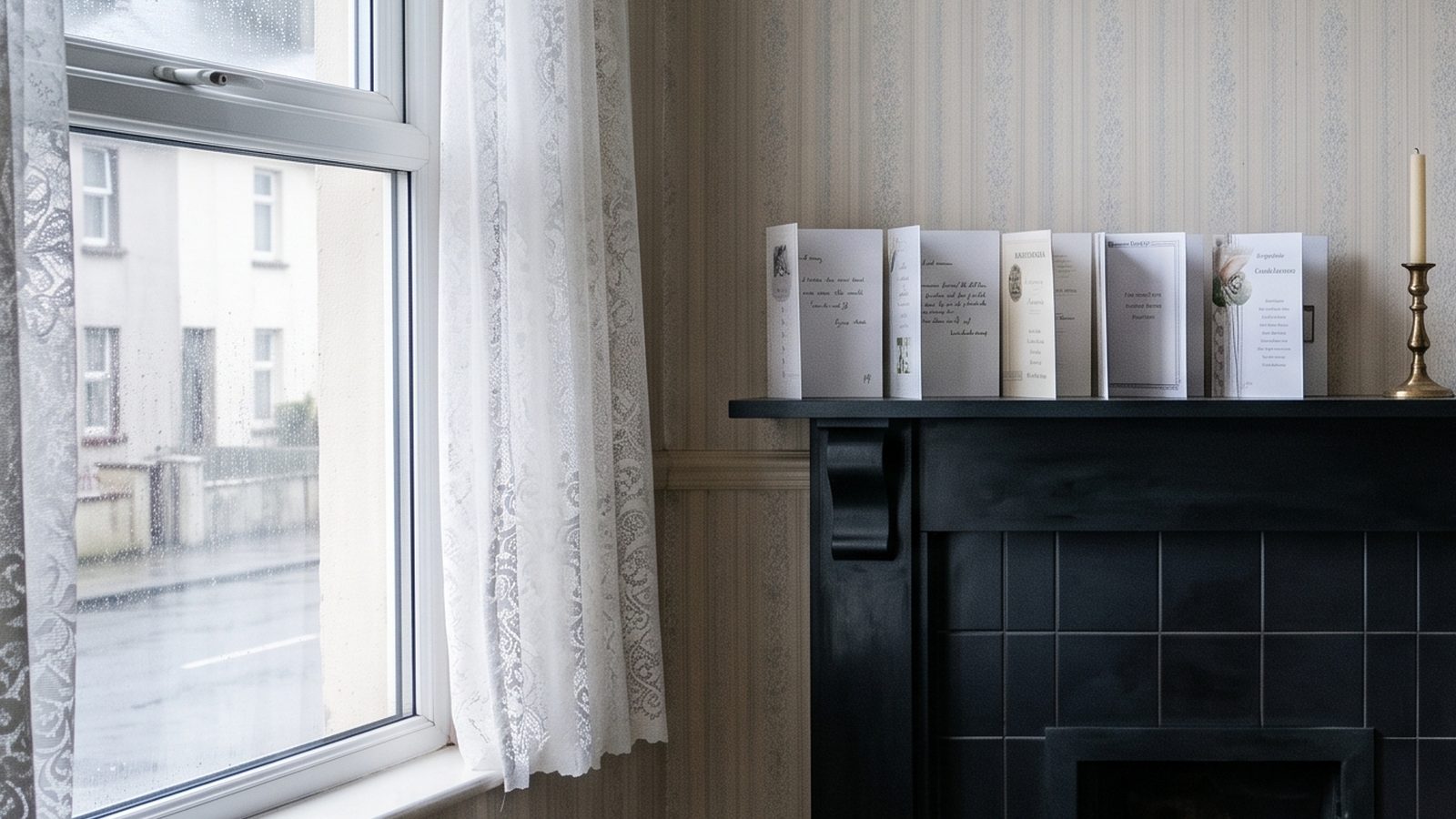
A month after the funeral, the callers stop calling. The sandwiches are gone, the cards are in a drawer, and everyone else has gone back to work. Ireland has an answer to that particular quiet, and it is older than most people realise.
What is a Month's Mind?
A Month's Mind is a Mass or gathering held about a month after a funeral, in memory of the person who died. That is the whole definition, and it is the one used on the death-notice sites and in parish newsletters alike. In practice it is the second gathering: the funeral is for the shock, and the Month's Mind is for the remembering, once the house has emptied out.
The name confuses people, because "mind" here has nothing to do with thinking. It is the older sense of the word — mind as in memory, as in minding someone. A Month's Mind is a month's remembrance.
It is still one of the most distinctively Irish things a family can do. The custom was wiped out in England at the Reformation and survived here, as the Irish Times columnist Frank McNally noted in July 2021, holding on even among people who had otherwise let go of the Church. In much of rural Ireland it is simply assumed to be happening, and the date is known around the parish before anyone announces it.
When does a Month's Mind take place?
Roughly one month after the death or the funeral — but "roughly" is the operative word. Even the notice sites hedge it as "approximately one month after the funeral", and most families land on the nearest weekend Mass rather than the exact calendar date. The parish's Mass schedule and the priest's availability usually decide it.
Common choices in Ireland:
- The Saturday vigil or Sunday Mass closest to the one-month date
- A weekday evening Mass, if that is when the parish normally offers anniversary intentions
- A date shifted by a week or two so family abroad can travel
Nobody will correct you for being nine days out. The point is the gathering, not the arithmetic. If you are counting from something, most families count from the funeral rather than the death, because that is the date everyone else remembers.
Where does the tradition come from?
Much further back than the Mass itself. The Venerable Bede, writing in the early eighth century, already described "minding days" as ancient in his own time, and traced them to the Norse minne — ceremonial observances in honour of the dead. Ireland did not invent the month's mind. Ireland just never stopped.
By the sixteenth century the phrase was common enough in England to be used as a joke. Shakespeare has Lucetta say a character has "a month's mind" to something in The Two Gentlemen of Verona, meaning a strong inclination — a pun that only works if your audience knows the religious custom cold. Two centuries later, editors had to explain the phrase to English readers as a relic of an older faith. The rite had gone; the idiom stayed behind.
Here it went the other way. The custom stayed and worked its way into the culture so thoroughly that, as McNally pointed out, Ireland is the only country in the world that holds a month's mind for a fictional character — Paddy Dignam, buried in Ulysses in June 1904, commemorated annually in Dublin by people who like the joke and mean it at the same time.
What actually happens at a Month's Mind?
Less than people fear. It is an ordinary Mass with the person's name at the centre of it, followed by everyone going somewhere for tea.
The usual shape:
- The Mass. The family sits together, usually near the front. The person's name is read out in the intentions. Some parishes light a candle; some invite the family to bring up symbols of the person's life at the offertory — a fishing rod, a set of knitting needles, a photograph.
- Readings and music. Often chosen by the family, sometimes read by a grandchild. There is more room here than at the funeral, when nobody had time to think.
- A few words. Shorter than a eulogy. Many families skip it entirely.
- After. The hotel, the local, or somebody's kitchen. This part matters as much as the Mass. Catholic Ireland's own pastoral guidance frames these gatherings as prayerful remembrance and gratitude, and says plainly that they help the grieving.
It is markedly less formal than the funeral. People who were too shattered to speak a month ago will talk for an hour. That is the whole design.
Funeral vs Month's Mind: what's different
| Aspect | Funeral | Month's Mind |
|---|---|---|
| Timing | Within days of the death | About a month later |
| Who comes | Everyone — neighbours, colleagues, the whole parish | Family, close friends, people who missed the funeral |
| Mood | Shock, duty, exhaustion | Remembrance, and often laughter |
| Planning time | Two or three days, in a fog | A few weeks, with a clear head |
| The family's job | Receive people | Choose what is said, read and played |
| Notice | Death notice, usually by the funeral director | Month's Mind notice, usually by the family |
| Afterwards | The house fills, then empties | The absence is named out loud |
Do you have to have one?
No. There is no obligation, religious or social, and plenty of Irish families do not hold one. If the person had no time for the Church, a Month's Mind Mass can feel like the wrong shape entirely.
Alternatives families use at the one-month mark:
- A gathering at the house or a favourite pub, with no service at all
- A visit to the grave or the place where the ashes were scattered, with just the immediate family
- A humanist or non-religious remembrance, led by a celebrant or by a family member
- A meal on the person's usual night — the Sunday dinner, the Friday takeaway
The custom is about a marked moment a month on. The Mass is the traditional container for it, not the requirement.
How do you let people know?
A Month's Mind notice, and the earlier you place it the better. RIP.ie's own guidance is worth following here: publish it soon after the death notice, because a linked button can then appear on that death notice for up to five weeks — exactly the window when people are still checking the page.
That timing detail matters more than it sounds. The people most likely to come to a Month's Mind are the ones who could not get to the funeral, and the death notice is where they will look.
The standard template runs roughly like this:
The Month's Mind Mass for [Name] will take place on [date] at [time] in [venue]. All Welcome.
Then a short verse if you want one, and a personal line: Much loved and sadly missed every day by your family, [names]. You can add up to three photographs. Word of mouth and the parish newsletter do the rest.
What do you say to someone at a Month's Mind?
Say the person's name. That is the whole answer.
"Sorry for your trouble" did its job at the funeral. A month later, the family is usually starving for something else: a story they have not heard, a detail nobody else knew, evidence that the person existed outside their own house. "She used to give out to me about parking on the grass" is worth more than any condolence.
What helps at the one-month mark:
- Use the past tense without apologising for it
- Tell them something specific the person said or did
- Ask a question about them — a real one
- Say you are still around in six weeks, and then be around in six weeks
What does not help: asking how they are "doing" in a tone that expects "grand", or steering away from the subject to spare them. They are already thinking about it. You are not reminding them of anything.
What music do families choose?
At the funeral, music gets decided in a hurry — often a hymn the parish always uses, because there was no time to think about it. A Month's Mind is the first chance most families get to choose properly.
What tends to come up:
- A hymn the person actually liked, rather than the default
- The song from their wedding, or the one that was always on in the car
- A piece played live by a grandchild who was too upset to play at the funeral
- Something written for them
That last option is newer, and it is the one we work on. After Songs makes a personalised memorial song from what a family tells us about the person — their phrases, their habits, the things people laugh about. You tell us about them, you approve every word of the lyrics before anything is recorded, and the finished song lives on a private page you can share with whoever you choose. It is €125, it includes two rounds of changes, and the page stays online for at least five years with everything downloadable from day one. The music is made with technology and checked by a person before any family hears it — we will always tell you that plainly.
Some families play it at the Month's Mind. Most just keep it.
Why the one-month mark is harder than people expect
Because the support ends before the grief does. The Central Statistics Office registered 35,587 deaths in Ireland in 2025 — about 97 a day — and each one sets off the same sequence: an intense week, then silence.
The tradition seems to have understood this long before anyone had language for it. Monsignor Cassato, describing a Month's Mind Mass in New York, placed it deliberately "a month after the initial shock and grief of death" — a time to hope the life had lasting meaning. Catholic Ireland's guidance says the same thing more plainly: these gatherings keep the memory alive and help the grieving.
So if the fifth week is worse than the first, nothing has gone wrong. That is the ordinary shape of it, and it is why the custom exists at all.
If you need someone to talk to, the Irish Hospice Foundation runs a free, confidential Bereavement Support Line on 1800 80 70 77, Monday to Friday, 10am to 1pm.
Questions families ask
Is a Month's Mind exactly one month after the death?
Not exactly. The convention is approximately one month after the funeral, and most Irish families choose the nearest convenient Mass instead of the precise date. Counting from the funeral rather than the death is the more common practice, since that is the date everyone else remembers.
Is a Month's Mind only for Catholics?
The Mass itself is a Catholic rite, but the one-month gathering is not restricted to it. Families with no religious practice mark the date with a meal, a visit to the grave, or a humanist remembrance. The custom predates the Mass — Bede described "minding days" as ancient in the eighth century.
Do you send invitations to a Month's Mind?
Generally no. Families place a Month's Mind notice on RIP.ie, mention it in the parish newsletter, and let word of mouth do the rest. It is worth publishing early: the notice can link from the death notice for up to five weeks, when people are still checking that page.
Do you bring anything to a Month's Mind?
Nothing is expected. Some families invite people to bring up symbols of the person's life at the offertory, and if that is happening, they will ask you directly. A story about the person is more welcome than a gift.
How is a Month's Mind different from an anniversary Mass?
Timing and mood. The Month's Mind falls about a month after the funeral, while the house is still raw. An anniversary Mass comes a year or more later, and is usually smaller and steadier. Many Irish families hold both.
What if we miss the one-month date?
Then hold it later. Families routinely move the date so relatives can travel from abroad. Six or seven weeks is common and nobody will think twice about it.
When you're ready, you can tell us about them — or listen to a few songs first.
Create their song Listen first →